Cocaine Anonymous Online Unlimited Seating 24/7/365
The online Fellowship of Cocaine Anonymous offers around-the-clock access to meetings and recovery resources, connecting members worldwide through C.A.’s Twelve-Step program. For many, online meetings are a first point of contact, providing a lifeline for those unable to attend in person and creating opportunities for fellowship across countries and time zones. These meetings have become a place to find sponsors, share experience, and build lasting connections, all while carrying the message to addicts who still suffer. Accessible from almost anywhere, online C.A. gatherings offer hope, faith, and courage—no matter where you are.
The online Fellowship of Cocaine Anonymous provides access to meetings and information about C.A.’s Twelve-Step recovery program 24 hours a day, 7 days a week, in addition to in-person meetings around the globe.
Online meetings connects the Fellowship of Cocaine Anonymous to addicts in recovery as well as those who still suffer from active addiction to drugs and/or alcohol. In many cases, online meetings are the first point of contact in establishing a lifeline of recovery from addiction.
People choose to attend online meetings for many different reasons. Some may wish to explore online meetings simply for a new experience. Whatever the inspiration, online meetings have something to offer everyone.
Online advantages to 12 Step Recovery
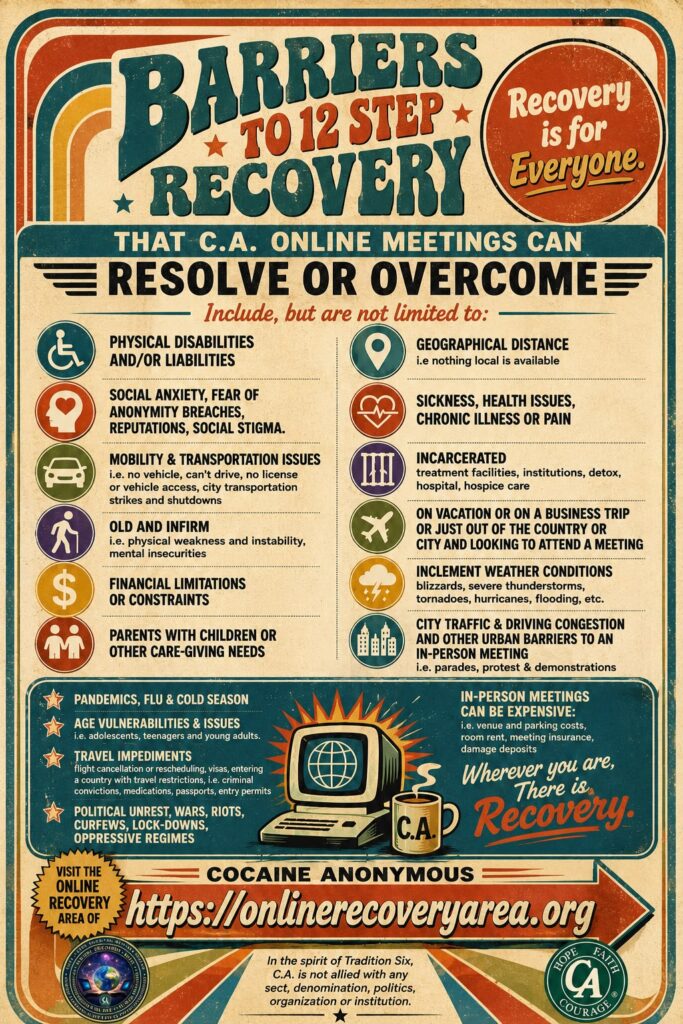
The creation of C.A. online areas and the C.A. service committees that serve the online C.A. member groups, helps to remove any impediments that suffering addicts may encounter when trying to find the recovery they seek and maximizes C.A. member participation. Barriers to 12 Step recovery that C.A. online meetings can resolve or overcome include, but are not limited to:
- Physical disabilities and/or liabilities.
- Social anxiety, fear of anonymity breaches, reputations, social stigma.
- Mobility and transportation issues i.e. no vehicle, can’t drive, no license or vehicle access, city transportation strikes and shutdowns.
- Old and infirm, i.e. physical weakness and instability, mental insecurities.
- Financial limitations or constraints.
- Parents with children or other care-giving needs.
- Geographical distance i.e nothing local is available.
- Sickness, health issues, chronic illness or pain.
- Incarcerated: treatment facilities, institutions, detox, hospital, hospice care.
- On vacation or on a business trip or just out of the country or city and looking to attend a meeting
- Inclement weather conditions: blizzards, severe thunderstorms, tornadoes, hurricanes, flooding, etc.
- City traffic and driving congestion and other urban barriers to an in-person meeting, i.e. parades, protest & demonstrations.
- Pandemics, flu & cold season.
- Age vulnerabilities and issues, i.e. adolescents, teenagers and young adults.
- Travel impediments: flight cancellation or rescheduling, visas, entering a country with travel restrictions, i.e. criminal convictions, medications, passports, entry permits, curfews.
- Political unrest, wars, riots, curfews, lock-downs, oppressive regimes
- In-person meetings can be expensive: i.e. venue and parking costs, room rent, meeting insurance, damage deposits.